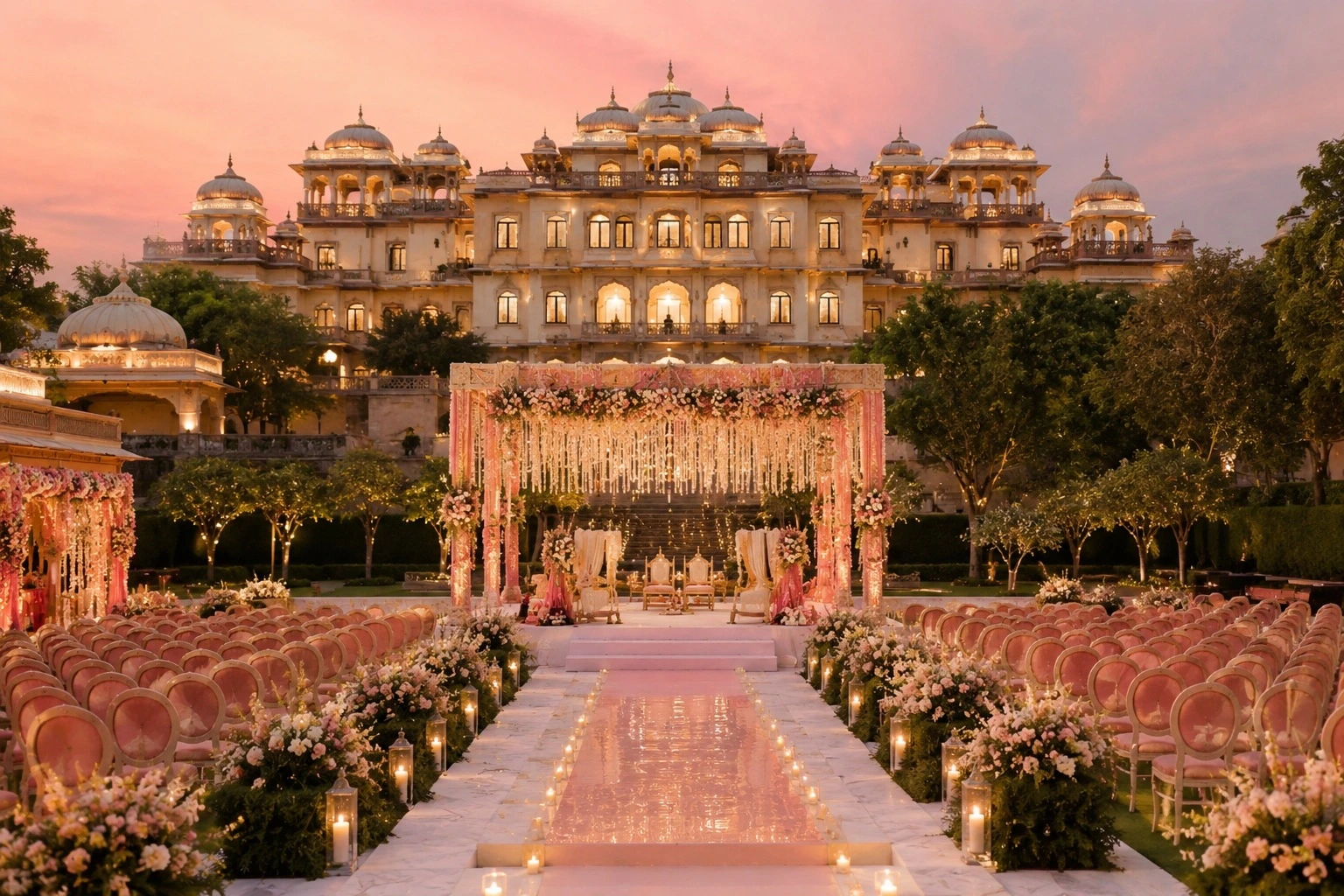
Planning a destination wedding sounds magical — until the guest list, venue shortlisting, vendor calls, and budget spreadsheets pile up. This is exactly why couples across the country are learning how to choose the best wedding planner in India before they book a single venue.
The best planner isn't necessarily the one with the most Instagram followers or the biggest portfolio. For a destination wedding, the real questions are simpler: Do they know the destination? Are they transparent about vendors and costs? Do they communicate consistently? And do they have a reliable plan when something inevitably goes wrong?
India offers some of the most breathtaking wedding backdrops in the world — royal havelis in Rajasthan, backwaters in Kerala, beaches in Goa, and hill retreats in Himachal. But a stunning location alone doesn't guarantee a stunning wedding. Execution matters as much as inspiration, and the planner you choose can have a major impact on how smoothly everything comes together.
This guide breaks down exactly what to look for, what to avoid, and how to compare wedding planning companies before you sign a contract.
Why Choosing the Right Wedding Planner Matters
A destination wedding involves moving parts that a local wedding simply doesn't have — outstation guest travel, hotel block bookings, permits, local vendor coordination, and weather contingencies, to name a few.
A skilled event planner brings:
- Established vendor relationships in the destination city
- On-ground crisis management for weather changes, delays, or last-minute guest additions
- Budget planning without compromising on design
- Cultural and ritual expertise across religions and regions
- A single point of contact instead of a dozen different phone numbers
In our experience covering destination weddings, the biggest planning issues rarely come from décor itself. They usually come from transportation delays, vendor miscommunication, and last-minute schedule changes — the parts that never show up in Pinterest boards but decide how the day actually feels.
How to Choose the Best Wedding Planner in India
Define Your Wedding Style
Before you start searching, get clear on the kind of wedding you want. A royal Rajasthani affair, an intimate beach ceremony, or a modern minimalist celebration each require different planning expertise. Some planners specialise in large-scale luxury weddings; others focus on boutique, intimate events. Knowing your style narrows the search considerably.
Review Their Portfolio
Almost every planner shows highlight reels online — but don't stop at pretty photos. Look for:
- Consistency in design quality across multiple weddings, not just one standout event
- Range of destinations they've actually executed weddings in
- Guest-experience touches like welcome kits, transport, and hospitality planning
- Varied décor styles rather than the same template repeated
A portfolio with one or two polished weddings mixed with visibly amateur work is worth questioning.
Check Reviews and Client References
Google reviews, wedding platforms, and Instagram comments reveal a lot. Look specifically for feedback on:
- Communication and responsiveness
- How they handled unexpected issues
- Transparency around costs
- Whether the final event matched what was promised
If possible, ask for two or three past client references and speak to them directly.
Compare Pricing and Package Transparency
A dependable wedding planning company should never be vague about costs. Request an itemised breakdown covering:
| What to Ask For | Why It Matters |
|---|---|
| Planning fee vs. execution fee | Some planners charge separately for design consultation and on-ground execution |
| Vendor commission structure | Helps you understand if vendors are being recommended for margin |
| Inclusions vs. add-ons | Avoids surprise costs closer to the wedding date |
| Payment schedule | Protects your cash flow across the planning timeline |
| Cancellation/postponement policy | Essential for destination weddings with travel dependencies |
Most wedding planners in India work on one of a few common pricing models: a fixed planning fee, a percentage of the total wedding budget, a per-day coordination fee, or a custom quote for full-service destination weddings. Ask which model applies before comparing quotes, since the numbers aren't directly comparable otherwise. Compare at least 3–4 companies before finalising anyone.
Evaluate Communication Style
You'll be in touch with your planner constantly — sometimes daily in the final weeks. Choose someone who:
- Responds within a reasonable time frame
- Explains options clearly instead of pushing decisions
- Is comfortable coordinating across time zones if you're planning from abroad
- Assigns a dedicated coordinator rather than a rotating cast of assistants
Check Local Vendor Relationships
This is where location-specific expertise really counts. If your venue is in Rajasthan, for instance, working with experienced wedding planners in Jaipur can make venue and vendor coordination considerably easier, since they already understand local venues, decorators, caterers, and transport routes. Established local relationships can make coordination smoother and may also help with vendor availability and negotiation — though it's worth confirming this directly rather than assuming it.
Ask How They Handle Unexpected Problems
Rain during an outdoor ceremony, a delayed flight for the bridal party, a vendor cancellation two days before the event — these things happen. Ask potential planners directly: "Tell me about a time something went wrong and how you fixed it." Their answer often tells you more about competence than any portfolio can.
Confirm Cultural and Ritual Experience
India's wedding traditions vary widely — Hindu, Sikh, Christian, Muslim, and regional customs each have specific rituals, timings, and requirements. A planner experienced across these traditions can customise your event authentically instead of applying a generic template.
Wedding Planner Comparison Checklist
Use this side-by-side checklist while shortlisting planners:
| Criteria | Planner A | Planner B | Planner C |
|---|---|---|---|
| Destination experience | |||
| Portfolio quality | |||
| Recent reviews | |||
| Pricing transparency | |||
| Vendor network | |||
| Guest management | |||
| Backup planning | |||
| Dedicated coordinator | |||
| Contract clarity |
Use this side-by-side checklist while shortlisting planners:
Red Flags to Watch For
- Refuses to provide a written quotation
- Won't explain vendor commissions
- Can't show recent, verifiable work
- Avoids sharing client references
- Takes unusually long to respond before you've even signed
- Promises unrealistically low pricing
- Has no backup plan for weather or vendor issues
- Changes your point of contact repeatedly
- Pushes specific vendors without explaining alternatives
- Doesn't clearly define what's included in the package
Common Mistakes Couples Make
- Choosing based on Instagram aesthetics alone, without checking execution history
- Not clarifying whether pricing includes vendor commissions
- Ignoring communication red flags during the initial consultation
- Hiring a planner unfamiliar with the specific destination city
- Skipping a written contract with clear deliverables and timelines
When Should You Book a Destination Wedding Planner?
As a practical rule, couples should start looking for a destination wedding planner around 8–12 months before the wedding, particularly if they're targeting popular venues or peak dates. This gives enough time to lock in preferred venues and negotiate better vendor rates.
Peak season varies by destination rather than following one national calendar, so it's worth checking what's busiest for your specific location. For Rajasthan, for example, cooler months are especially popular for outdoor celebrations, while beach destinations like Goa follow a different seasonal pattern altogether.
Final Thoughts
Choosing the right wedding planner isn't about finding the fanciest portfolio — it's about finding someone whose experience, transparency, and local expertise match what your wedding actually needs. Take your time comparing options, ask direct questions, and don't hesitate to check references. A well-chosen planner doesn't just organise your wedding; they take on the logistical weight so you can actually enjoy the celebration instead of managing it.
Couples planning a Rajasthan celebration may also want to explore experienced wedding planners in Jaipur who understand local venues, vendors, and logistics — including teams like Weddings and Events by Amitesh, who work regularly within the region's palace and heritage-venue circuit.
Planning a destination wedding in Rajasthan? Explore our wedding planning services or get in touch with our team to discuss your preferred destination, guest count, and wedding dates.